
Driving consistent rice yields: lessons from the Fasham’s mixed farming operation in the Western Murray Valley
CY26 Annual Summary | Top 5% Grower Case Study - Fasham Farms
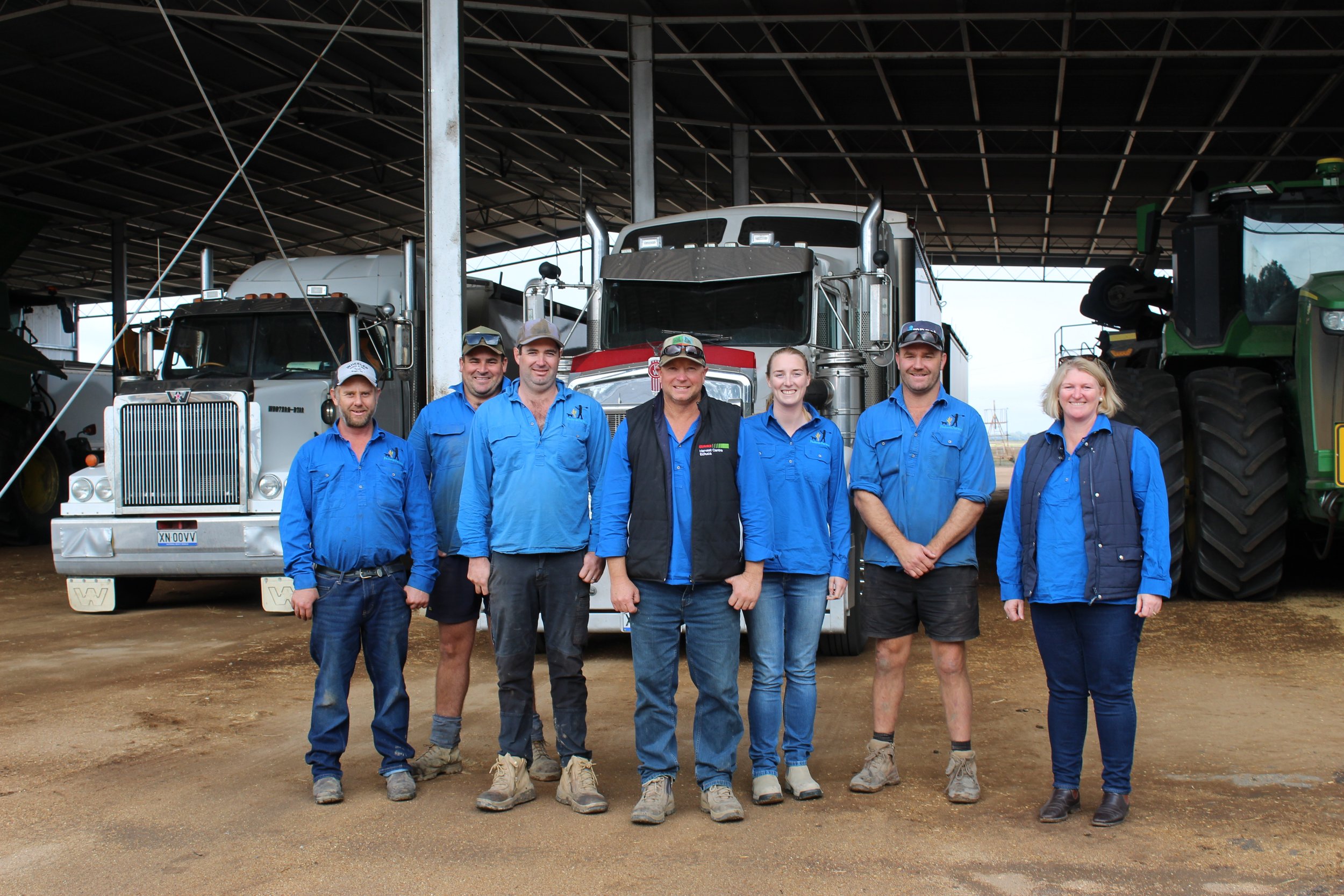
The Fasham family has farmed their Wakool property since the early 1960s, with Steve joining the business in the late 1990s. Debbie later became involved and today two of their three children, Emily and Sophie, are stepping into the operation, continuing the family legacy.
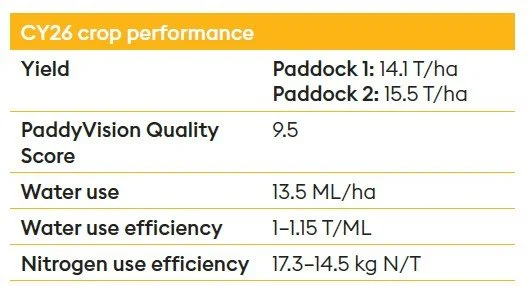
In previous seasons, the business achieved average rice yields of around 11.5 T/ha. Their focus is now on lifting performance through system refinement, timely management and continuous learning.
Inside the 2026 season
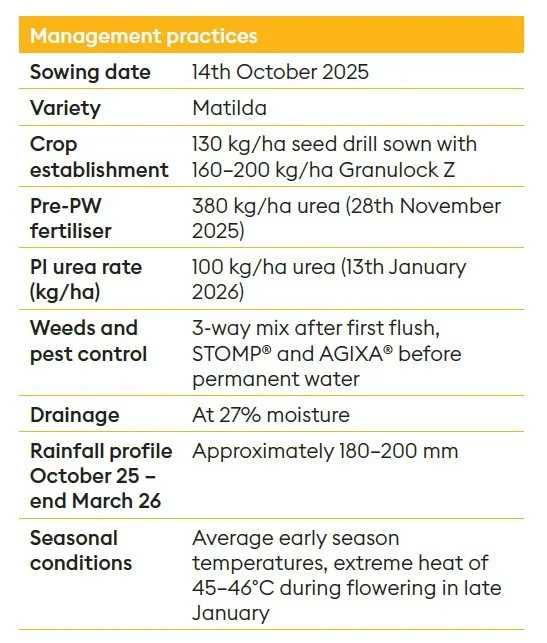
The 2026 season was characterised by generally favourable conditions. As Steve noted, “establishment was the best and easiest we’ve ever had,” supported by cooler early-season conditions and ~14.5 mm of rainfall by late October.
However, extreme heat (45–46°C) during flowering in late January increased water demand and sterility risk.
Managing the crop
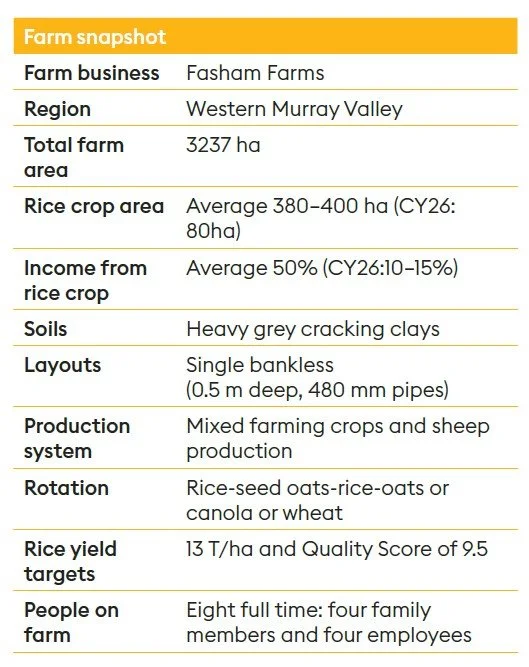
Due to limited water availability and high prices, rice area was reduced to 80 ha of Matilda.
Crop monitoring and management decisions
Crop monitoring is a cornerstone of the Fasham system. Regular paddock checks ensure even establishment, particularly in lower bays where water can delay growth.
The Rice Management Dashboard supports decision-making, but paddock inspections remain critical, especially at panicle initiation (PI) and drainage, where crop maturity and grain moisture are verified through hand sampling.
As Emily noted: “We thought we might be draining too late, but sampling showed we were right on time.”
Floats introduced over recent seasons, help maintain consistent water levels (~25 cm at microspore) and improve irrigation accuracy. Satellite imagery supports nitrogen decisions, although it is supplemented with frequent (often daily) visual assessments.
Key learnings
The Fasham’s system highlights the importance of timeliness at every stage. Sowing is typically in early October, with crop development managed to reach PI in early January. Drainage timing is closely monitored to maximise grain quality.
Their approach also emphasises the importance of people. Steve and Debbie noted that consistent, skilled staff, supported by clear communication, regular meetings and recognition are critical to achieving reliable results.
Key takeaways
→ Get the timing right: early sowing, early PI and well-timed drainage maximise yield and grain quality.
→ Monitor everything: frequent paddock checks and tools like the Rice Management Dashboard ensure decisions are on time.
→ Invest in people: skilled staff, clear communication and consistency drive reliable outcomes.
Looking ahead
A key strength of the Fasham operation is the integration of the next generation. Emily and Sophie are taking on defined roles, with Emily focusing on cropping and Sophie on livestock, whilst Steve and Debbie continue to support and mentor them, ensuring continuity and ongoing improvement in the system.
“Our children should have the same opportunity as we had, but we need to do more to make that possible.”
Steve and Debbie Fasham