
Efficiency in action: the Small family’s whole-of-system approach
CY26 Annual Summary | Top 5% Grower Case Study - Rivena Nominees
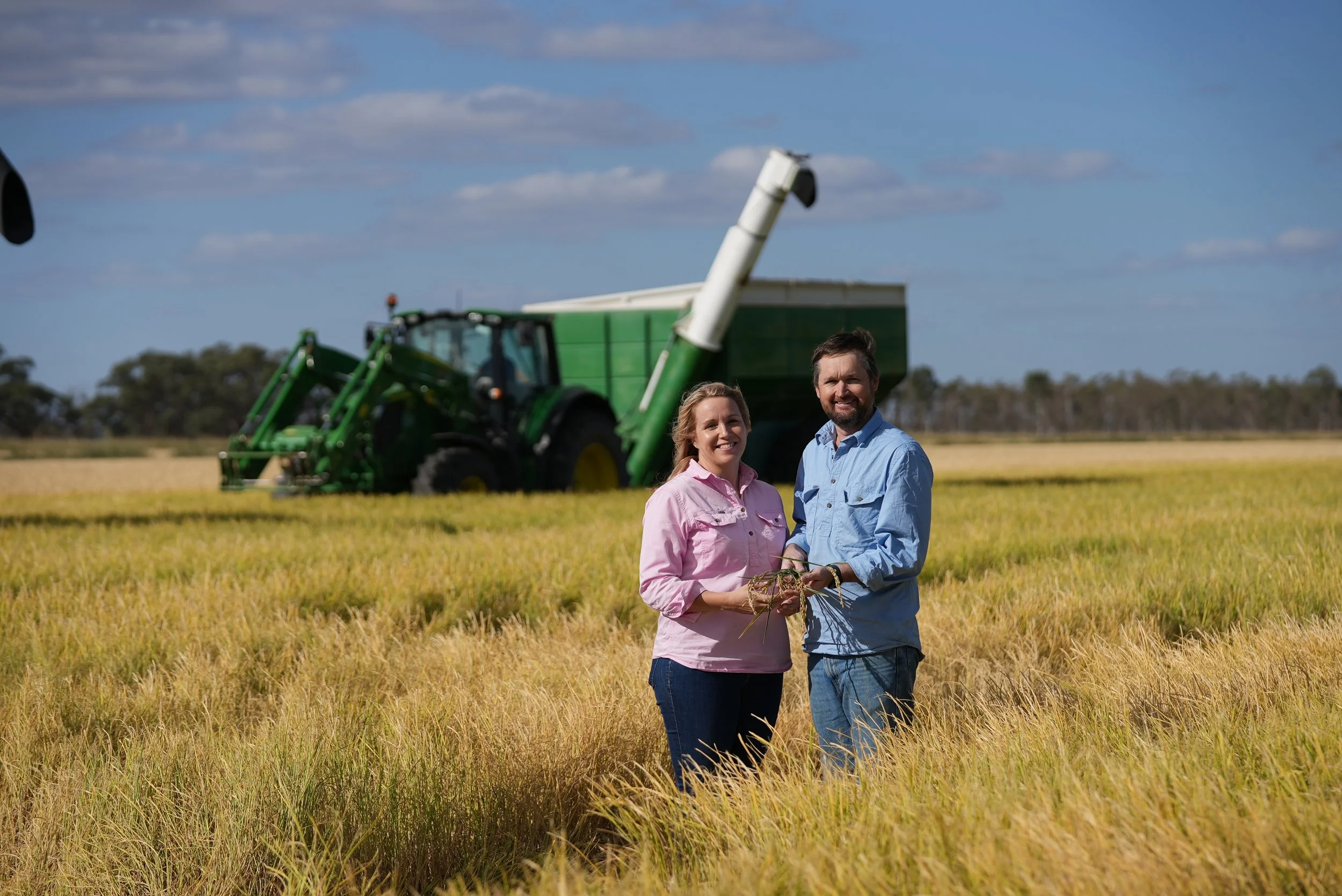
The Small family has farmed in the Stud Park/ Deniliquin area since the early 1950s. Now representing the fourth generation, Josh joined the business 10 years ago and works alongside his parents, Geoff and Leanne, who remain actively involved in day-to-day operations.
Over the past decade, Josh has established himself as a leading grower, recognised as SunRice Grower of the Year in 2024 alongside his wife Emily. Their success reflects a strong focus on system efficiency, adaptability and continuous improvement. Continually monitoring his soils with testing and a regular program of liming and gypsum where required is fundamental to his system.
Inside the 2026 season
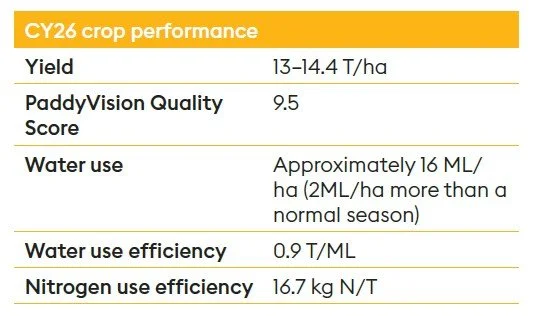
Reflecting on the season, Josh noted, “We had a challenging start with uncertainty around water availability and price. The summer was dry and water use was high, but we still achieved strong yield and grain quality – overall a very positive result.”
Managing the crop
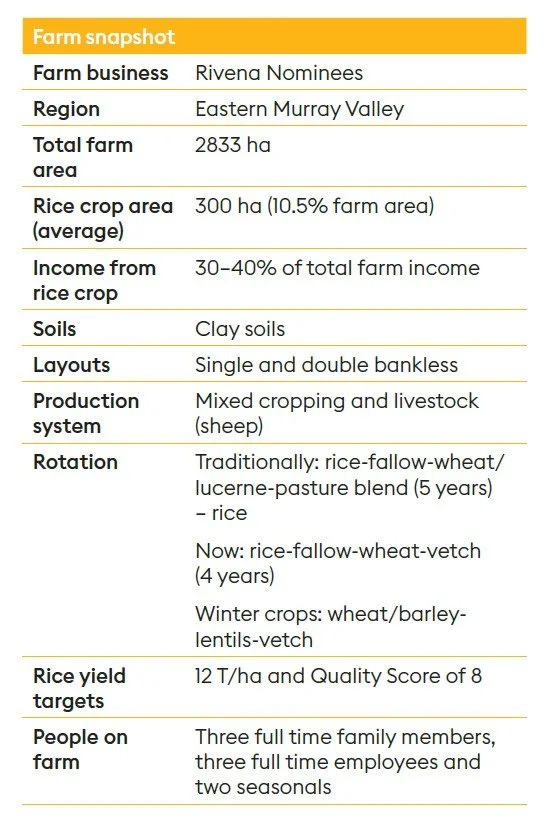
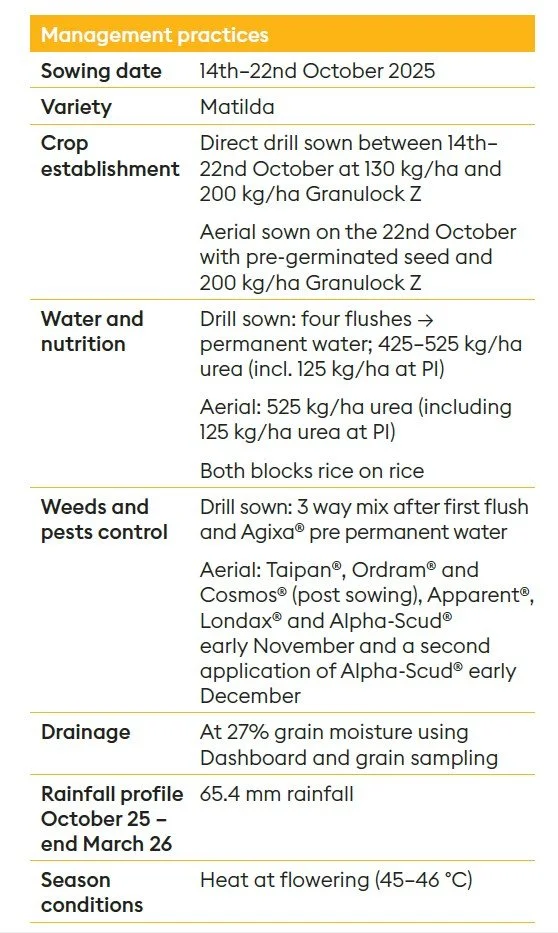
Due to water constraints in CY26, rice area was reduced to 74 ha, including 48.6 ha of Matilda following vetch and returning to wheat. Soil testing guided inputs, with gypsum applied pre-rice and lime ahead of winter cereals.
Crop monitoring and management decisions
Crop monitoring is central to the Small family’s system. While tools such as the Rice Management Dashboard and NDVI imagery support decision-making, these are always backed by regular paddock inspections.
Josh uses the Rice Management Dashboard particularly for nitrogen timing and drainage decisions, supported by grain sampling and visual assessment. Water depth sensors are also a key tool, helping manage and maintain precise water levels. Plans are in place to expand their use across the farm.
Key learnings
The Small’s approach highlights the importance of getting the fundamentals right. Crop timing and precise water management are critical, particularly in dry seasons where irrigation drives performance.
Technology plays a supporting role with tools like the Rice Management Dashboard, water depth sensors, precision water management and irrigation automation systems improving monitoring and enabling more timely, precise and informed decisions.
At the same time, long-term system performance is underpinned by flexible rotations, including legumes and pasture phases, which support soil health and weed management. A skilled, consistent team and strong family involvement remain essential to delivering reliable outcomes.
Key takeaways
→ Nail the fundamentals: crop timing and precise water management drive success.
→ Use technology: tools can support decisions and improve timing, efficiency and control.
→ Stay flexible: ensure the farming system is adaptive to changing environments.
Looking ahead
Josh plans to progressively expand irrigation automation across the farm, implementing it paddock by paddock. This will improve water control, allow 24/7 management of water depth and reduce labour requirements. Even in aerial systems, automation is expected to improve consistency and efficiency.
“First, you need to get the basics right — preparation, timing, nitrogen and water management. Monitoring and informed decisions at all crop stages is what ultimately drives yield.”
Josh Small