
Soil & Farm Systems
CY27 Beds in Bays
Raised beds and drainage lines can help move excess water away from rice plants, improving establishment, crop evenness and trafficability.
This fact sheet explains when beds in bays may be useful, how they can be set up, and what to consider to make them work well.
CY27 Pre-Sowing Meeting Q&A: Key Takeaways
Following our recent pre-sowing meetings, Rice Extension's Siarne Deeves and Mark Groat answered some of the most common questions from growers. Here's a quick summary of the key points.
What is your rice stubble worth?
Planting a winter crop directly after rice harvest to take advantage of a full moisture profile is an integral part of many farming systems. In most cases, due to the high stubble loads of rice and the quick turnaround between rice harvest and winter crop planting, burning is considered the only option to get a timely winter crop in the ground.
There has been much work done on alternative uses of stubble; with the majority including baling and removal from the paddock. This can be an expensive operation that could delay winter crop planting and increase soil compaction.
Burning is under increasing scrutiny, with many regions of the world, including Australia, constrained by regulation and community expectations. Burning stubble also removes valuable nutrients and organic matter. If we could retain these high stubble loads, we could dramatically improve the structural integrity and enhance the long-term productivity of our heavy clay soils.
Nitrogen: cost, efficiency and return
Nitrogen is one of the primary drivers of yield in rice production once the crop foundation is in place and it is also one of the most significant input costs. So, it is important to have a considered approach to nitrogen use which ensures that the rate of application matches crop and soil requirements, the method of application is the most effective for the system and that the timing of application is aligned with crop growth and seasonal conditions.
Ground preparation for CY27
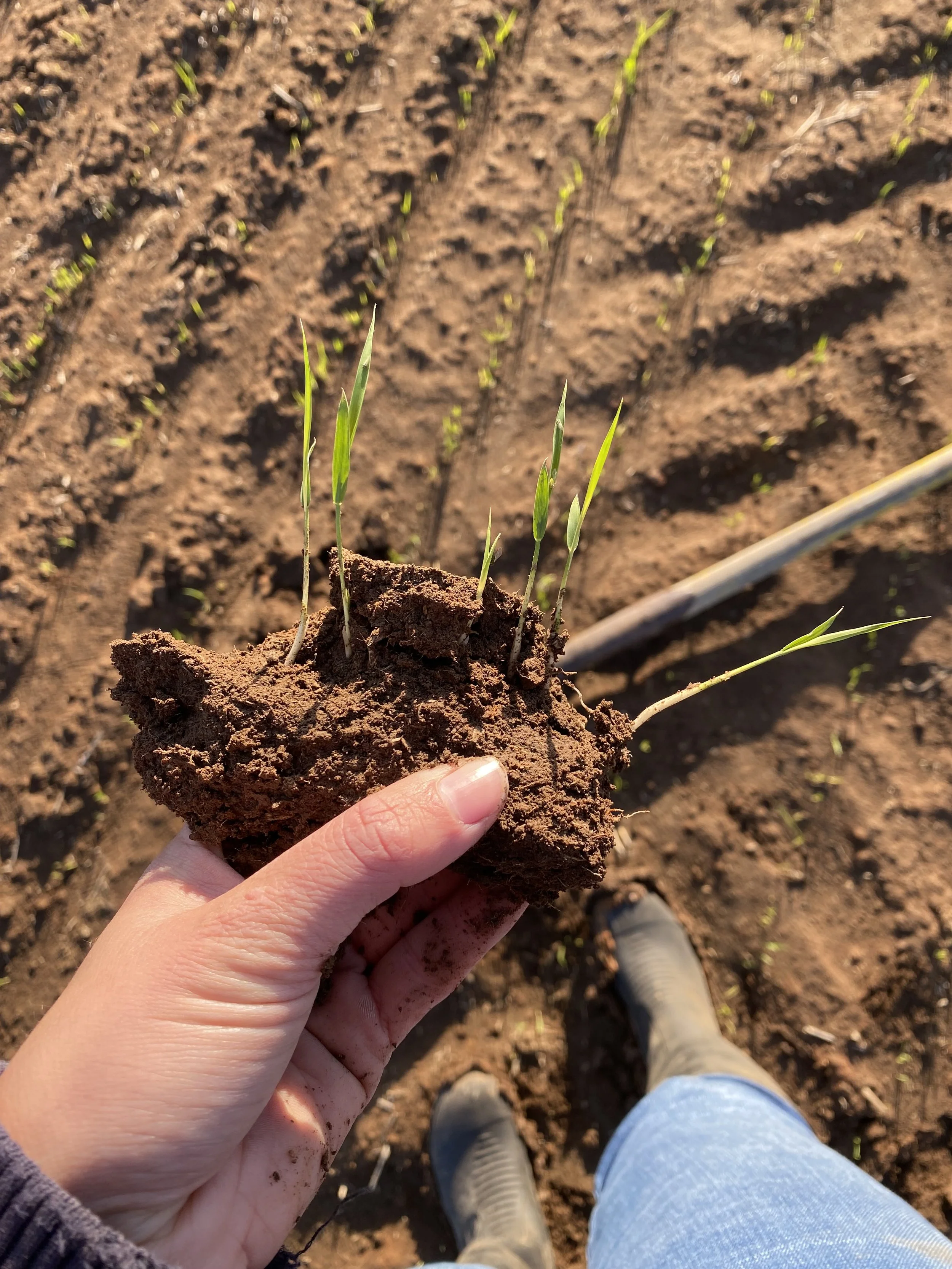
Timely and consistent establishment continues to be a major driver of high‑yielding rice crops in the Riverina. Rice Extension benchmarking shows that crops with strong early vigour and uniform emergence achieve the most reliable results across variable seasons.
Digging deeper into soil health
This year’s workshops placed strong focus on sodicity, slaking, soil acidity, and both the importance of soil testing and the interpretation of soil tests to enhance productivity and ensure long term soil health. All areas where early intervention can protect yield potential and improve profitability.
Benefits of EM mapping and soil testing
Achieving balanced crop nutrition depends on understanding the crop's nutritional requirements and knowing the most effective time, form and method of applying additional nutrients if required.
Getting the most out of nitrogen and irrigation in a tight year
Your nitrogen topdressing requirement should be determined by how much water you have available to finish off your crop, current soil moisture status and likely returns.
Growing wheat straight after rice
Growing reliable, high yielding wheat crops immediately after rice is a great opportunity to improve the productivity of rice farming systems in southern NSW. This factsheet includes; the important Dos and Dont's, surface drainage, soil type, rice stubble handling, wheat sowing time, wheat sowing rate, fertiliser and top-dressing, variety selection and soil acidity.
Rice stubble management
It is important to capitalise on the valuable resources in rice stubble, including soil moisture, nutrients in the rice stubble and the rice stubble organic matter content. This article includes some simple strategies to leverage last seasons rice stubble.
Determining nitrogen top-dressing requirements for wheat
Calculating how much urea is required to be top dressed onto winter cereals is a matter of determining how much the crop will require, how much is currently available and then how much is required to make up the difference. This step-by-step guide walks you through the process with recommendations.
Barley seed rate and irrigation frequency
One of the more difficult decisions growers have to make each spring is to decide where to use their irrigation water to get the best returns. This resource provides some guidance to support decision making.
Setting the benchmark - Rice growers maximising yields and returns, and making the most of water
Rice is a valuable component of irrigation farm businesses and crop rotations for many irrigators in the Murray and Murrumbidgee valleys. From a business perspective, maximising returns per megalitre, per hectare and per dollar spent is essential for the long-term growth of a farm business.
Soil Health Guide
The guide provides information to help identify possible soil health issues using nine simple visual tests conducted in the paddock. The tests are cheap and easy, and can be undertaken using home-made equipment such as wire quadrants.
Switching from rice to row crops using beds in bays
In southern New South Wales, there has been considerable interest in bankless channel layouts for irrigation, i.e. a eld of stepped bays with water being supplied to the eld by a bankless channel at the head of each bay. Conversion to this new layout has been driven by the ease of water management and labour savings, particularly compared with traditional siphon layouts for row cropping.
Managing and retaining large irrigation stubbles
Better soil moisture retention and better soil health as a result of stubble retention are worth the effort to overcome barriers to adoption. This article outlines approaches and considerations.
Permanent beds on rice farms
Permanent lateral beds in bays potentially offer several advantages over cropping on flat layouts. The research reported here is part of a large project involving field experiments in varying irrigation systems in Australia and north west India, computer modelling of crop growth and development, and economic analysis of different cropping systems.